- 2477 Vista Drive. Lake Geneva, WI 53147
- Monday - Friday 9:00 AM to 5:00 PM
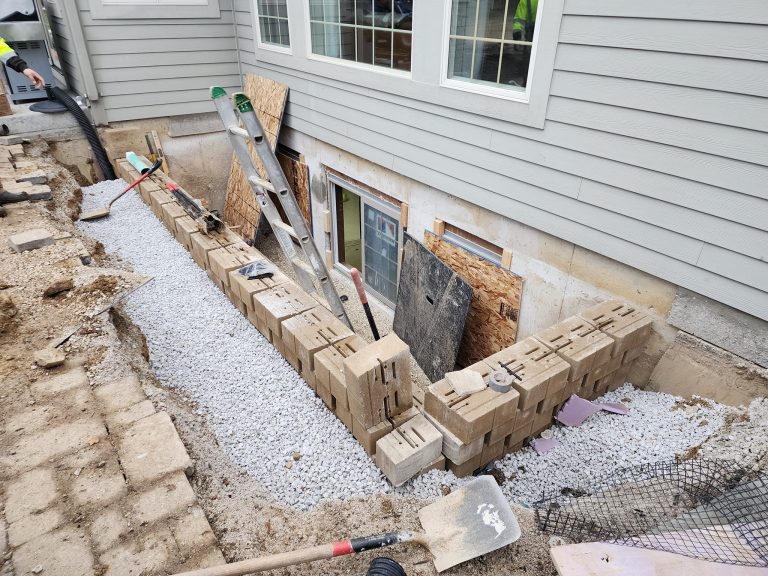
An egress window can make a Wisconsin basement safer, brighter, and much more useful—but the window itself is only part of the installation.
What happens around and below the window well matters just as much.
A poorly planned window well can collect rainwater, snowmelt, leaves, and runoff. Over time, that water can place unnecessary pressure around the basement opening and create concerns that could have been avoided with better grading and drainage from the beginning.
For Wisconsin homeowners considering an egress window installation, understanding drainage is one of the most important parts of planning the project.
Wisconsin Soil Can Make Drainage More Important
Soil conditions vary throughout Wisconsin, but many areas of southeastern Wisconsin contain silty, loamy, and clay-heavy soils. The Wisconsin Geological and Natural History Survey specifically identifies clayey soils around parts of the Milwaukee and Racine-Kenosha region.
Why does that matter?
Clay-rich soil generally allows water to move through it more slowly than sandy soil. University of Wisconsin Extension notes that clay soils have high water-holding capacity but lower drainage because their fine particles slow water movement.
Around an egress window well, that means water management should never be an afterthought.
A Window Well Is Basically a Low Point Beside Your Foundation
Installing a basement egress window usually requires excavation below the surrounding grade.
That creates a recessed area beside the foundation.
Without proper planning, water may move toward that area from:
The objective is not to somehow keep every drop of water out of the well.
The goal is to make sure water has somewhere appropriate to go instead of accumulating against the window and foundation.
Wisconsin Code Addresses Water Around Egress Wells
Wisconsin’s residential construction code specifically recognizes this concern.
SPS 321.03 requires below-grade egress windows to have an areaway or window well and states that it must be constructed so that water entering the area does not enter the dwelling.
That requirement highlights an important point:
A compliant egress system is not just about window dimensions.
It also involves the surrounding excavation, well, drainage, and grading.
Signs Your Window Well May Have a Drainage Problem
Homeowners should periodically look at their window wells, particularly after heavy rain or spring snowmelt.
Possible warning signs include:
One isolated puddle does not automatically mean there is a serious problem.
But water consistently remaining in the well deserves attention.
Grading Around the Window Matters
Water naturally follows the slope of the ground.
If landscaping or soil slopes toward the house, runoff may also move toward the foundation and window well.
That is why the area surrounding an egress installation should be considered as part of the project.
Good exterior planning may include evaluating:
Sometimes the window itself is perfectly installed while the surrounding landscape is directing water toward it.
Watch Where Your Downspouts Drain
One surprisingly simple source of window well problems is roof runoff.
During a heavy Wisconsin rainstorm, a roof can move a substantial amount of water through its gutters and downspouts.
If that water discharges immediately beside an egress well, the drainage system around the window may have to handle far more water than necessary.
Downspouts should generally direct water away from the foundation rather than toward the window well.
This is something homeowners can easily check after installation.
Snow Creates a Different Wisconsin Challenge
Wisconsin homeowners also need to consider what happens during winter.
Snow can accumulate:
The problem often becomes more noticeable when temperatures rise and snow begins melting quickly.
If the surrounding soil is still frozen or saturated, water may have fewer places to move.
Keeping excessive snow and debris out of the well can help the drainage system function as intended.
Do Window Well Covers Solve Drainage Problems?
A quality window well cover can be helpful.
It can reduce the amount of:
that enters the well.
But a cover should not be treated as a substitute for proper drainage.
Wind-driven rain, groundwater, melting snow, and runoff can still reach the area around the well.
The installation beneath the cover still needs to manage water correctly.
And because the well is part of an emergency exit, any cover used with an egress window should not prevent someone from escaping.
Landscaping Can Affect Egress Window Wells
Landscaping around an egress window can make the installation look much more integrated with the property.
But homeowners should avoid creating conditions that interfere with drainage or emergency access.
Avoid allowing:
An egress window well should remain both functional and accessible.
Proper Installation Starts Before the Foundation Is Cut
Drainage is one reason professional egress installation involves more than simply cutting a hole through the basement wall.
Before choosing the final location, it helps to evaluate what is happening outside the home.
One side of the house may have:
Those factors can make one location considerably better than another, even when both locations appear equally convenient from inside the basement.
Protect the Entire Egress System
Once installed, homeowners should occasionally inspect the complete system rather than looking only at the glass.
Check:
The window
Does it open easily?
The well
Is it clear of debris?
The drainage area
Is water accumulating?
The landscaping
Is soil or mulch moving toward the opening?
The exit path
Could someone actually climb out during an emergency?
A few minutes of inspection can help identify small issues before they become larger problems.
Professional Egress Window Installation in Wisconsin
An egress window should provide a safe emergency exit without creating unnecessary water concerns around your basement.
That requires the window, window well, excavation, grading, and drainage to work together as one system.
EZegress Windows specializes in professional basement egress window installation throughout Wisconsin. Every property is different, which is why evaluating foundation conditions, exterior grading, drainage, and window placement before installation matters.
Planning an egress window for your Wisconsin basement?
Contact EZegress Windows to request an estimate and determine the right solution for your home.
